


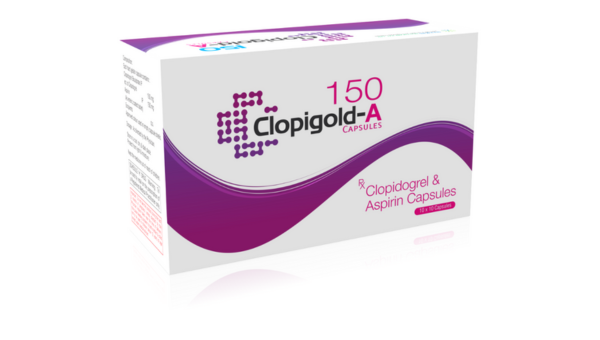




Clopidogrel 75 mg + Aspirin 150 mg caps
Jun 28, 2022
A prescription cardiovascular medication called CLOPIGOLD A 150 contains 75 mg of clopidogrel and 150 mg of aspirin in a single capsule. For antiplatelet control, this combination medication is frequently used to help patients at risk of cardiovascular and cerebrovascular events avoid blood clot formation.
By preventing platelet aggregation, clopidogrel and aspirin operate in concert to lower the risk of heart attack, stroke, and other thrombotic consequences. Patients who have unstable angina, acute coronary syndrome (ACS), or have undergone percutaneous coronary interventions (PCI) with stent implantation may benefit most from CLOPIGOLD A 150.
A single capsule containing two powerful antiplatelet drugs guarantees efficient and practical treatment, enhancing adherence and clinical results. Cardiologists trust CLOPIGOLD A 150 because of its shown effectiveness.
Uses
CLOPIGOLD A 150 is indicated for the prevention and management of thrombotic cardiovascular events in high-risk patients. Its primary uses include:
1. Acute Coronary Syndrome (ACS)
The combination of Clopidogrel and Aspirin reduces the risk of heart attacks and complications in patients experiencing unstable angina or myocardial infarction.
2. Post-Percutaneous Coronary Intervention (PCI)
CLOPIGOLD A 150 is prescribed after stent placement to prevent stent thrombosis, ensuring long-term patency of the coronary arteries.
3. Secondary Prevention of Cardiovascular Events
Patients with a history of myocardial infarction, stroke, or peripheral arterial disease benefit from this dual antiplatelet therapy to lower the risk of recurrent events.
4. High-Risk Thrombotic Patients
It is useful for individuals with multiple risk factors such as diabetes, hypertension, and hyperlipidemia, where the likelihood of clot formation is elevated.
By inhibiting platelet aggregation through two different pathways, CLOPIGOLD A 150 provides comprehensive protection against clot-related complications.
Benefits
CLOPIGOLD A 150 offers multiple clinical and patient-centric benefits:
1. Dual Mechanism of Action
Clopidogrel inhibits ADP-induced platelet aggregation, while Aspirin irreversibly inhibits cyclooxygenase (COX-1), reducing thromboxane A2 synthesis. Together, they provide enhanced antiplatelet efficacy.
2. Prevention of Heart Attacks and Stroke
Regular therapy significantly lowers the risk of myocardial infarction, ischemic stroke, and systemic embolism, particularly in high-risk cardiovascular patients.
3. Improved Post-Stent Outcomes
The combination reduces the likelihood of stent thrombosis, improving long-term success rates of PCI procedures.
4. Convenient Single-Capsule Therapy
Combining two drugs in a single capsule simplifies treatment, enhances patient compliance, and reduces the chances of missed doses.
5. Evidence-Based Clinical Efficacy
Numerous clinical studies have confirmed that dual antiplatelet therapy (DAPT) with Clopidogrel and Aspirin is more effective than single-agent therapy in preventing recurrent thrombotic events.
6. Long-Term Cardiovascular Protection
CLOPIGOLD A 150 can be incorporated into long-term management plans for patients with a history of ACS or cerebrovascular disease, contributing to improved prognosis and reduced hospitalization rates.
These advantages make CLOPIGOLD A 150 a cornerstone therapy in cardiology and preventive cardiovascular care.
Dosage
The dosage of CLOPIGOLD A 150 must be tailored by a healthcare professional based on the patient’s cardiovascular risk profile and clinical condition.
Recommended Dosage:
-
Typical Dose: One capsule of CLOPIGOLD A 150 mg once daily, preferably taken at the same time each day.
-
Administration: Capsules should be swallowed whole with water. Do not crush or chew the capsule, as this may affect drug release and efficacy.
-
With or Without Food: Can be taken with or without food, but taking it consistently with meals may reduce gastrointestinal discomfort.
Special Considerations:
-
Duration of therapy is usually determined by clinical indication, such as post-PCI stent placement or ACS management.
-
In patients with bleeding risk or renal/hepatic impairment, the dosage and treatment duration should be carefully evaluated.
-
Therapy should not be discontinued abruptly without consulting a doctor, as this can increase the risk of thrombotic events.
Proper adherence to the prescribed regimen ensures optimal cardiovascular protection.
Side Effects
While CLOPIGOLD A 150 is generally well-tolerated, some patients may experience side effects, mostly related to the antiplatelet action.
Common Side Effects:
-
Gastrointestinal discomfort or heartburn
-
Mild nausea or vomiting
-
Headache
-
Easy bruising
Less Common but Serious Side Effects:
-
Gastrointestinal bleeding or ulcers
-
Severe or unexplained bruising
-
Hemorrhagic stroke or intracranial bleeding
-
Allergic reactions, including rash, itching, or swelling
Important Note:
Patients should immediately report signs of excessive bleeding, such as blood in stool or urine, prolonged bleeding from cuts, or persistent nosebleeds. Early detection allows timely intervention and minimizes complications.
Precautions and Warning
Before initiating therapy with CLOPIGOLD A 150, several precautions must be considered:
1. Bleeding Risk
Patients with a history of bleeding disorders, gastrointestinal ulcers, or hemorrhagic stroke should use this medication with caution.
2. Surgical Procedures
Inform the doctor before any planned surgery or dental procedure, as temporary discontinuation may be required to reduce bleeding risk.
3. Drug Interactions
CLOPIGOLD A 150 can interact with other medications, including anticoagulants, NSAIDs, corticosteroids, and herbal supplements. Always inform the physician of all concurrent drugs.
4. Pregnancy and Breastfeeding
Use during pregnancy or lactation only if clearly indicated and prescribed by a healthcare professional.
5. Kidney and Liver Function
Dose adjustment or monitoring may be necessary in patients with renal or hepatic impairment.
6. Avoid Abrupt Discontinuation
Stopping therapy suddenly can increase the risk of thrombotic events, particularly after stent placement or ACS. Always consult a doctor before discontinuation.
Adhering to these precautions ensures maximum safety and therapeutic effectiveness.
Conclusion
CLOPIGOLD A 150, combining Clopidogrel 75 mg and Aspirin 150 mg, is a clinically proven dual antiplatelet therapy designed to reduce the risk of heart attacks, strokes, and other thrombotic events in high-risk cardiovascular patients.
Recent Post

Buy Semaglutide Injection 4mg Online in India | Price, Uses & Availability

Buy Etoricoxib and Cyclobenzaprine Hydrochloride Tablets in India from Steris Healthcare. Check uses, composition, price, and order online.

Semaglutide Injection 8 mg: Uses, Dosage, Price & How to Buy Online Safely

Buy Semaglutide Injection 2 mg Online : Price, Uses & Side Effects

सेमाग्लूटाइड इंजेक्शन ऑनलाइन खरीदें | बेहतरीन कीमत

सेमाग्लूटाइड इंजेक्शन: कीमत, उपयोग, फायदे, खुराक और ऑनलाइन खरीदने की पूरी जानकारी

Buy Semaglutide Injection Online in India | Price & Uses

Nefopam Hydrochloride 30 mg Tablets : How It Works, Uses & Safety Information

Ferric Maltol, Vitamin C, Folic Acid, Vitamin D2 and Vitamin B12 Capsules: Uses, Benefits, Side Effects and Complete Guide to Iron Deficiency Support

Aripiprazole 10 mg : Uses, Benefits, Dosage & Side Effects – Complete Guide