


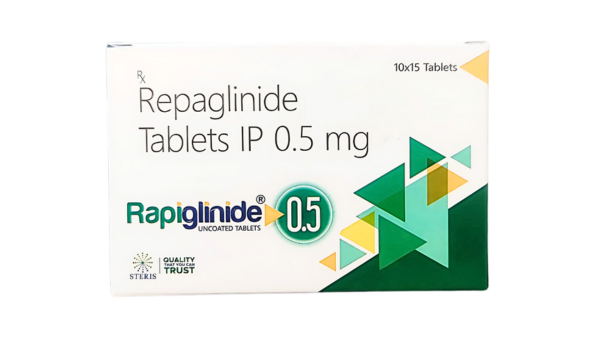




Repaglinide 0.5 mg Tablet Uses, Dose, Side Effects & Benefits - RAPIGLINIDE 0.5
Sep 01, 2025
Introduction
RAPIGLINIDE 0.5 is a prescription medicine containing Repaglinide 0.5 mg as its active ingredient. It belongs to the class of oral antidiabetic agents known as meglitinides, specifically used in the treatment of Type 2 Diabetes Mellitus (T2DM). This medication plays a vital role in controlling postprandial (after-meal) blood sugar spikes, helping patients maintain stable glucose levels.With the growing prevalence of diabetes worldwide, medicines like Repaglinide 0.5 mg tablets have become essential for effective and safe diabetes management.
Composition
-
Active Ingredient: Repaglinide 0.5 mg
-
Brand Name: RAPIGLINIDE 0.5
-
Dosage Form: Oral Tablet
Repaglinide 0.5 mg Uses
The repaglinide 0.5 mg tablet is primarily indicated for:
-
Type 2 Diabetes Mellitus (T2DM): Helps lower blood glucose levels when diet and exercise alone are insufficient.
-
Postprandial Glucose Control: Especially useful for controlling blood sugar spikes after meals.
-
Combination Therapy: May be used with other antidiabetic agents such as metformin if monotherapy does not achieve adequate glucose control.
Mechanism of Action
Repaglinide stimulates the pancreas to release insulin by binding to ATP-dependent potassium channels on pancreatic beta cells. This action helps reduce blood glucose levels rapidly, particularly after meals.
-
Onset of action: Rapid (within 30 minutes).
-
Duration: Short-acting, making it suitable for flexible dosing around meals.
Repaglinide Dose & Administration
-
Initial Dose: Typically 0.5 mg taken orally before each main meal.
-
Dose Adjustment: Based on blood glucose response, dose may be increased gradually.
-
Maximum Dose: Should not exceed 16 mg/day.
-
Administration: Taken within 15 minutes before a meal. If a meal is skipped, the dose should also be skipped.
Repaglinide Side Effects
Like all medicines, repaglinide tablets may cause some side effects, though not everyone experiences them.
-
Common Side Effects:
-
Hypoglycemia (low blood sugar)
-
Headache
-
Dizziness
-
Gastrointestinal issues (nausea, diarrhea, constipation)
-
-
Serious Side Effects (rare):
-
Severe hypoglycemia requiring medical attention
-
Liver function abnormalities
-
Allergic reactions (rash, itching, swelling)
-
Precautions & Warnings
-
Not recommended for Type 1 Diabetes Mellitus or Diabetic Ketoacidosis (DKA).
-
Use with caution in patients with liver or kidney impairment.
-
Avoid alcohol as it may increase the risk of hypoglycemia.
-
Pregnant or breastfeeding women should take it only under medical supervision.
Repaglinide Tablets – Patient Benefits
-
Provides flexible dosing around meals.
-
Reduces post-meal sugar spikes.
-
Can be combined with other antidiabetic agents for better glycemic control.
-
Short-acting and less likely to cause prolonged hypoglycemia compared to sulfonylureas.
Why To Buy RAPIGLINIDE 0.5 from Steris Healthcare Pvt Ltd?
When it comes to selecting high-quality medicines, Steris Healthcare Pvt Ltd stands out as a trusted name in the pharmaceutical industry. Here’s why patients and healthcare providers prefer Steris Healthcare:
-
WHO-GMP Certified Manufacturing – ensuring global quality and safety standards.
-
Affordable Pricing – making essential medicines like repaglinide 0.5 mg tablets accessible to all patients.
-
Wide Product Range – covering diabetes care, cardiovascular, neuro, and more.
-
Pan-India Distribution – strong supply chain ensuring availability in every corner of India.
-
Trusted Reputation – known for reliability, transparency, and ethical business practices.
FAQs on Repaglinide 0.5 mg
1. What is repaglinide 0.5 mg used for?
Repaglinide 0.5 mg is used to manage Type 2 Diabetes Mellitus, particularly to control blood sugar spikes after meals.
2. How should I take repaglinide tablets?
Take one tablet of repaglinide 0.5 mg orally within 15 minutes before meals. Skip the dose if you skip the meal.
3. Can repaglinide be taken with metformin?
Yes, repaglinide tablets can be combined with metformin or other antidiabetic medicines for better glucose control, but only under medical supervision.
4. What are the common side effects of repaglinide 0.5 mg?
The most common side effects include hypoglycemia, headache, dizziness, and stomach upset.
5. Is repaglinide safe for kidney patients?
Patients with kidney or liver impairment should take repaglinide with caution and under the strict supervision of a doctor.
6. Can pregnant or breastfeeding women take repaglinide?
Repaglinide should only be used in pregnancy or breastfeeding if prescribed by a healthcare professional.
7. What should I do if I miss a dose of repaglinide 0.5 mg?
If you miss a dose, simply skip it and take the next dose before your next meal. Do not double the dose.
8. Why choose RAPIGLINIDE 0.5 from Steris Healthcare?
Because Steris Healthcare provides high-quality, affordable, and reliable medicines backed by WHO-GMP standards and nationwide availability.
Conclusion
RAPIGLINIDE 0.5 containing Repaglinide 0.5 mg is a trusted and effective antidiabetic tablet for managing Type 2 Diabetes Mellitus. By controlling post-meal glucose levels and providing flexible dosing, it helps patients live healthier and more balanced lives.For genuine and high-quality repaglinide 0.5 mg tablets, Steris Healthcare Pvt Ltd is the most reliable choice in India.
Recent Post

Buy Etoricoxib and Cyclobenzaprine Hydrochloride Tablets in India from Steris Healthcare. Check uses, composition, price, and order online.

Semaglutide Injection 8 mg: Uses, Dosage, Price & How to Buy Online Safely

Buy Semaglutide Injection 2 mg Online : Price, Uses & Side Effects

सेमाग्लूटाइड इंजेक्शन ऑनलाइन खरीदें | बेहतरीन कीमत

सेमाग्लूटाइड इंजेक्शन: कीमत, उपयोग, फायदे, खुराक और ऑनलाइन खरीदने की पूरी जानकारी

Buy Semaglutide Injection Online in India | Price & Uses

Nefopam Hydrochloride 30 mg Tablets : How It Works, Uses & Safety Information

Ferric Maltol, Vitamin C, Folic Acid, Vitamin D2 and Vitamin B12 Capsules: Uses, Benefits, Side Effects and Complete Guide to Iron Deficiency Support

Aripiprazole 10 mg : Uses, Benefits, Dosage & Side Effects – Complete Guide

Levamisole Hydrochloride 150 mg Tablets IP : Uses, Benefits, Dosage & Side Effects Explained