


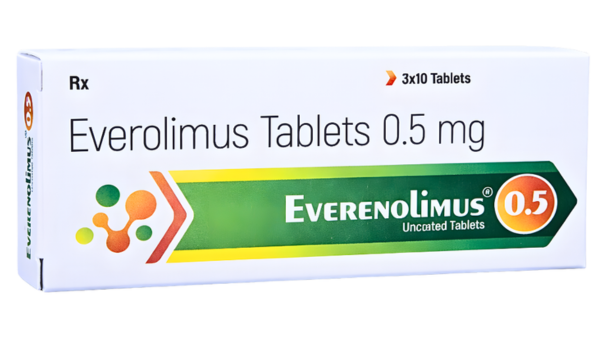




Everolimus 0.5 mg Tablets : How They Work, Benefits, and Precautions
Mar 31, 2026
Everolimus is a widely used prescription medicine known for its role in treating certain cancers and preventing organ rejection after transplantation. Everolimus tablets 0.5 mg, marketed under the brand name EVERENOLIMUS 0.5, are formulated to provide precise and controlled therapeutic effects in patients requiring long-term treatment.
Everolimus tablet belongs to a class of drugs called mTOR inhibitors. It works by blocking a protein responsible for cell growth and division, thereby slowing down abnormal cell proliferation. This makes it highly effective in cancer treatment and also in suppressing the immune system to prevent organ rejection.
With increasing demand for targeted therapies, everolimus 0.5 has become an essential medication in modern healthcare, offering improved outcomes for patients with complex conditions.
Everolimus Tablet Uses
There are several clinically approved everolimus tablet uses across oncology and transplant medicine. The most common uses of everolimus tablets 0.5 mg include:
- Cancer Treatment – Used in advanced breast cancer, kidney cancer (renal cell carcinoma), and neuroendocrine tumors
- Organ Transplantation – Prevents rejection in kidney and liver transplant patients
- Tuberous Sclerosis Complex (TSC) – Helps treat brain tumors such as subependymal giant cell astrocytoma (SEGA)
- Kidney Tumors – Used for angiomyolipoma associated with genetic disorders
- Pancreatic Neuroendocrine Tumors – Helps control tumor progression
These everolimus tablet uses highlight its versatility and effectiveness in managing both malignant and non-malignant conditions.
Everolimus Benefits
The key everolimus benefits make it a preferred choice among healthcare professionals:
- Inhibits Tumor Growth – Slows or stops the spread of cancer cells
- Prevents Organ Rejection – Reduces immune system activity to protect transplanted organs
- Targeted Therapy – Acts specifically on the mTOR pathway for precise treatment
- Improves Survival Rates – Enhances long-term outcomes in cancer patients
- Convenient Oral Therapy – Easy-to-take tablet form improves patient compliance
- Dual Therapeutic Action – Effective in both oncology and transplant care
Regular use of everolimus tablets under strict medical supervision can significantly improve disease control and quality of life.
Everolimus Tablet Dosage
The dosage of everolimus tablet 0.5 mg varies depending on the condition being treated and the patient’s response.
- Typically taken once daily or as directed by the physician
- Should be taken at the same time every day for consistent results
- Can be taken with or without food, but consistency is important
- Swallow the tablet whole with water; do not crush or chew
Important Guidelines:
- Follow your doctor’s instructions strictly
- Do not skip doses or stop treatment without medical advice
- Regular blood tests may be required to monitor drug levels and organ function
Everolimus Side Effects
Like all medications, everolimus tablets 0.5 mg may cause certain side effects. Some common and serious everolimus side effects include:
Common Side Effects
- Mouth ulcers or sores
- Fatigue and weakness
- Nausea and vomiting
- Diarrhea
- Skin rash
- Loss of appetite
Serious Side Effects
- Increased risk of infections due to suppressed immunity
- Lung problems (shortness of breath, cough)
- Kidney dysfunction
- High blood sugar (hyperglycemia)
- Delayed wound healing
If any severe or persistent symptoms occur, immediate medical attention is required.
Precautions and Warning
Before starting everolimus tablet, it is important to consider the following precautions:
- Pregnancy & Breastfeeding: Not recommended, as it may harm the fetus or infant
- Infections: Avoid exposure to infections due to weakened immune response
- Liver or Kidney Disease: Use cautiously with proper monitoring
- Vaccinations: Avoid live vaccines during treatment
- Drug Interactions: Inform your doctor about all medications and supplements you are taking
- Surgery: Inform your doctor before any surgery due to delayed wound healing
Additional Warnings:
- Avoid grapefruit and grapefruit juice as they may interfere with drug metabolism
- Regular monitoring of blood counts, kidney function, and blood sugar is essential
About Steris Healthcare
Steris Healthcare is a trusted pharmaceutical company known for delivering high-quality, affordable, and effective medicines across India. The company follows strict quality standards and is committed to improving patient care through innovation and ethical practices.
Key highlights of Steris Healthcare:
- WHO-GMP certified manufacturing facilities
- Use of high-quality raw materials
- Wide distribution network across India
- Focus on patient safety and affordability
- Strong commitment to research and development
With products like EVERENOLIMUS 0.5, Steris Healthcare continues to contribute to advanced healthcare solutions.
FAQs (Frequently Asked Questions)
Q1. What is Everolimus tablet 0.5 mg used for?
Everolimus tablet uses include cancer treatment, prevention of organ rejection, and management of certain benign tumors.
Q2. How should I take everolimus tablets 0.5 mg?
Take it once daily at the same time, with or without food, as prescribed by your doctor.
Q3. What are the common everolimus side effects?
Common everolimus side effects include mouth ulcers, fatigue, nausea, diarrhea, and skin rash.
Q4. Can everolimus be taken without a doctor’s prescription?
No, everolimus tablet is a prescription medicine and should only be taken under medical supervision.
Q5. Is everolimus 0.5 safe for long-term use?
Yes, but only under strict monitoring by a healthcare professional due to potential side effects and risks.
Conclusion
Everolimus tablets 0.5 mg (EVERENOLIMUS 0.5) are a powerful and targeted treatment option for managing certain cancers and preventing organ rejection. With its advanced mechanism of action, everolimus effectively slows down abnormal cell growth while supporting transplant success.
Recent Post

Buy Etoricoxib and Cyclobenzaprine Hydrochloride Tablets in India from Steris Healthcare. Check uses, composition, price, and order online.

Semaglutide Injection 8 mg: Uses, Dosage, Price & How to Buy Online Safely

Buy Semaglutide Injection 2 mg Online : Price, Uses & Side Effects

सेमाग्लूटाइड इंजेक्शन ऑनलाइन खरीदें | बेहतरीन कीमत

सेमाग्लूटाइड इंजेक्शन: कीमत, उपयोग, फायदे, खुराक और ऑनलाइन खरीदने की पूरी जानकारी

Buy Semaglutide Injection Online in India | Price & Uses

Nefopam Hydrochloride 30 mg Tablets : How It Works, Uses & Safety Information

Ferric Maltol, Vitamin C, Folic Acid, Vitamin D2 and Vitamin B12 Capsules: Uses, Benefits, Side Effects and Complete Guide to Iron Deficiency Support

Aripiprazole 10 mg : Uses, Benefits, Dosage & Side Effects – Complete Guide

Levamisole Hydrochloride 150 mg Tablets IP : Uses, Benefits, Dosage & Side Effects Explained